

Demand for roadside vehicle assistance is rising in tandem with the increase in worldwide auto sales. Therefore, the manufacturers are providing their consumers with 24-hour roadside assistance in order to meet the growing demand for this service. This helps manufacturers utilise marketing to stay competitive and draw in new customers. In the case that the customer's vehicle breaks down or crashes, the service offers help. The business provides on-site assistance for common roadside issues like flat tyres, dead batteries, and mechanical and electrical repairs through roadside car assistance. The need for vehicle assistance services is being driven by a number of factors, including growing worries about road safety and better connection in newer models of cars. Additionally, the expansion of the market is being fueled by the addition of roadside auto support services by insurance. Additionally, the number of traffic accidents in the US is expected to rise during the forecast period, which would likely speed up market expansion.
DRIVING FACTORS
In recent years, the market for electric vehicles in the US has grown significantly. In 2021, EV sales in the US increased by almost 100% year over year. By 2030, the Biden administration wants to sell 50% of EVs. Additionally, the Biden administration claims that the US would spend USD 7.5 billion on the construction of 0.5 million public EV charging stations. And anticipate that by 2030, sales of passenger vehicles in the US will be dominated by battery electric vehicles (BEV), with a market share of close to 30%.
Additionally, as sales of hybrid and electric vehicles rise, manufacturers and service providers of roadside vehicle assistance will need to update their technology. This will increase demand for roadside vehicle assistance during the course of the projection period. According to a report by consumer insights and data analytics company J.D. Power, in August 2022, despite the expansion of public charging stations, customers' satisfaction with public Level 2 charging fell to 633 from 643 in 2021 (on a scale of 1,000 points), while satisfaction with the faster DC fast charger segment stayed constant at 674. Such elements might play a crucial role in assuaging consumers' anxieties about the adoption of electric vehicles, which would fuel the growth of the U.S. roadside assistance business.
RESTRAINING FACTORS
One death from being struck outside of a car on the side of the road occurs every six days, or around 60 tow truck operators each year, according to a recent survey by the International Towing and Recovery Museum. It is become harder and harder to keep light-duty tow truck drivers for roadside auto assistance service providers given the risk and stress of their job. The payroll for motor vehicle towing has climbed on average by 9.12% annually over the last three years, which is more than double the national rate, according to the Bureau of Labour Statistics 2021.
Additionally, a California car-towing business called "Motorway" faced with a personnel shortage in July 2022, which resulted in it taking up to three hours to rescue stranded drivers. Despite having space for at least 100 people, the company only has 46 employees now compared to its pre-pandemic workforce of 70. In addition, many employees left their positions during the Great Resignation in opposition to the low pay, inadequate benefits, and bad working conditions. The distance between clients and insurance firms widens as insurance prices rise. As a result, all of these problems are impeding market expansion as a whole.
Report Coverage
Global Roadside Assistance research report categorizes the market for global based on various segments and regions, forecasts revenue growth, and analyzes trends in each submarket. Global Roadside Assistance report analyses the key growth drivers, opportunities, and challenges influencing the global market. Recent market developments and Roadside Assistance competitive strategies such as expansion, product launch and development, partnership, merger, and acquisition have been included to draw the competitive landscape in the market. The report strategically identifies and profiles the key Roadside Assistance market players and analyses their core competencies in each global market sub-segments.
| REPORT ATTRIBUTES | DETAILS |
|---|---|
| Study Period | 2017-2030 |
| Base Year | 2020 |
| Forecast Period | 2022-2030 |
| Historical Period | 2017-2019 |
| Unit | Value (USD Billion) |
| Key Companies Profiled | Agero, Inc. (U.S.), Allstate Insurance Company (U.S.), Best Roadside Service, LLC (U.S.), Better World Club (U.S.), CARCHEX (Maryland, U.S.), Good Sams Enterprise (U.S.), OnStar (U.S.), Progressive Casualty Insurance Company (U.S.), State Farm Mutual Automobile Insurance Company (U.S.), USAA (U.S.) |
| Segments Covered | • By Product |
| Customization Scope | Free report customization (equivalent to up to 3 analyst working days) with purchase. Addition or alteration to country, regional & segment scope |
Key Points Covered in the Report
- Market Revenue of Roadside Assistance Market from 2021 to 2030.
- Market Forecast for Roadside Assistance Market from 2021 to 2030.
- Regional Market Share and Revenue from 2021 to 2030.
- Country Market share within region from 2021 to 2030.
- Key Type and Application Revenue and forecast.
- Company Market Share Analysis, Roadside Assistance competitive scenario, ranking, and detailed company
profiles. - Market driver, restraints, and detailed COVID-19 impact on Roadside Assistance
Market
Competitive Environment:
The research provides an accurate study of the major organisations and companies operating in the global Roadside Assistance market, along with a comparative evaluation based on their product portfolios, corporate summaries, geographic reach, business plans, Roadside Assistance market shares in specific segments, and SWOT analyses. A detailed analysis of the firms' recent news and developments, such as product development, inventions, joint ventures, partnerships, mergers and acquisitions, strategic alliances, and other activities, is also included in the study. This makes it possible to assess the level of market competition as a whole.
List of Major Market Participants
Agero, Inc. (U.S.), Allstate Insurance Company (U.S.), Best Roadside Service, LLC (U.S.), Better World Club (U.S.), CARCHEX (Maryland, U.S.), Good Sams Enterprise (U.S.), OnStar (U.S.), Progressive Casualty Insurance Company (U.S.), State Farm Mutual Automobile Insurance Company (U.S.), USAA (U.S.)
Primary Target Market
- Market Players of Roadside Assistance
- Investors
- End-users
- Government Authorities
- Consulting And Research Firm
- Venture capitalists
- Third-party knowledge providers
- Value-Added Resellers (VARs)
Market Segment:
This study forecasts global, regional, and country revenue from 2019 to 2030. Spherical Insights has segmented the global Roadside Assistance market based on the below-mentioned segments:
Global Roadside Assistance Market, By Provider
Auto Manufacturer
Motor Insurance
Independent Warranty
Automotive Clubs
Global Roadside Assistance market, By Vehicle Type
Passenger Cars
Commercial Vehicles
Global Roadside Assistance Market, By Service
Towing
Tire Replacement
Fuel Delivery
Others
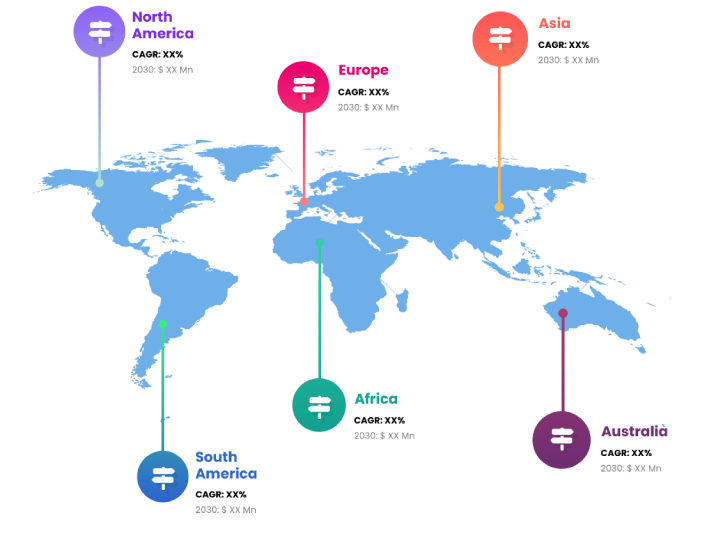
Global Roadside Assistance market, Regional Analysis
- Europe: Germany, Uk, France, Italy, Spain, Russia, Rest of Europe
- The Asia Pacific: China,Japan,India,South Korea,Australia,Rest of Asia Pacific
- South America: Brazil, Argentina, Rest of South America
- Middle East & Africa: UAE, Saudi Arabia, Qatar, South Africa, Rest of Middle East & Africa
You will get in-depth and extensive roadside assistance market market research and competitor analysis for your business to help you develop more profound insights into the roadside assistance market Market.
Through INFINITIVE Data Expert is a professional Market Research services, I will identify the roadside assistance market market size, demand & opportunities, growth rate, and target audience with a comprehensive analysis of your competitors.