

The practise of monitoring and guiding employees in order to improve their ability to sell goods or services is referred to as sales performance management, or SPM for short. There are software solutions available that can be of use in managing the performance of sales. These programmes are intended to automate several aspects of the process of corporate performance management while simultaneously encouraging performance that is focused towards sales. SPM software often contains a number of elements, some of which include goal setting and planning, feedback, the development of skills, and performance analysis. The SPM software may maintain tabs on a variety of different things, including sales quotas, regions, incentive programmes, work assessment, and forecasts.
Today's businesses are undergoing significant changes, one of which is the transition of their entire ecosystem to a digital platform. Businesses are embracing SPM software in order to empower their growth and to increase the enterprises' acceleration in the rapidly changing market conditions. This software assists the businesses in establishing a roadmap for the business and putting their strategies into action in a manner that is much more efficient. In addition to this, SPM offers a solution that is both transparent and structured for the relationship between the company and its workforce. For example, in September of 2020, Anaplan Inc. made the announcement that they will be releasing a new business performance platform known as PlanIQ. This new intelligence framework, which is equipped with powerful AI and ML capabilities, provides insights of prediction and much more accurate forecasts that are explainable. This, in turn, helps enhance the accuracy of plans and contributes to decision making.
The performance of sales has a direct impact on the growth of revenue and profitability for an organisation. The performance of sales is given a high priority inside organisations in order to maximise sales revenues, boost client acquisition and retention, and improve profit margins. SPM solutions give the required tools and capabilities to monitor, analyse, and improve sales performance. This enables organisations to identify areas for improvement, adopt focused strategies, and drive revenue growth. SPM solutions also provide the necessary tools and capabilities to drive revenue growth. In the current highly competitive business landscape, organisations are consistently working towards the goal of gaining a competitive edge. The effectiveness of our sales efforts is an essential component in securing this competitive edge. By putting an emphasis on sales performance, businesses may improve customer engagement and satisfaction, optimise their sales processes, and beat their rivals. SPM solutions provide insights that help organisations to make decisions based on data, giving them an advantage over their competitors. These insights are provided in the form of sales analytics, performance dashboards, and goal-tracking capabilities. Companies are becoming more aware of the need of ensuring that their sales targets are in line with their overall business objectives. SPM solutions make this alignment easier to achieve by empowering businesses with the ability to articulate and express their sales objectives, monitor their progress towards those objectives, and evaluate their success relative to predetermined key performance indicators (KPIs) and targets. SPM solutions guarantee that sales teams work towards similar objectives by linking sales activities with broader organisational goals. This helps to develop a cohesive and results-oriented sales culture inside the organisation. The ever-increasing importance placed on sales success compels businesses to work to perfect their sales procedures. By streamlining and enhancing their sales processes, companies can boost their efficiency, decrease their costs, and shorten the length of their sales cycles. SPM systems provide functionality like as lead management, opportunity tracking, sales forecasting, and pipeline management. These functions enable businesses to automate and standardise their sales processes, identify and eliminate bottlenecks, and follow best practises. The optimisation of this process results in an increase in both productivity and performance.
There are many obstacles that businesses must overcome in order to successfully implement a sales performance management (SPM) solution. These difficulties may manifest themselves during the design, implementation, or post-implementation phases of the project. To guarantee that the SPM deployment is effective, it is essential to understand these problems and find solutions to them. It can be difficult to integrate an SPM solution with pre-existing systems like customer relationship management (CRM) software, financial systems, and data warehouses. The mapping and alignment of data structures, the maintenance of data consistency and quality, and the creation of a seamless data flow between systems can be challenging tasks for organisations. Integration challenges result in delays, problems with the quality of the data, and conflicting metrics regarding sales performance. For purposes such as performance measurement, incentive computation, and report generation, SPM solutions are dependent on data that is precise and dependable. However, organisations frequently face issues that are associated with the availability and quality of their data. Incorrect performance measures and faulty compensation calculations are the direct result of missing or inconsistent data, redundant data, and outdated information. It is vital to make efforts towards data purification and validation in order to guarantee the authenticity of the data that is used in the SPM solution. Introducing a new SPM solution necessitates making efforts towards user adoption as well as change management. There is a possibility that initial resistance to the implementation will come from sales teams and other stakeholders owing to a fear of change or concerns about the appearance of micromanagement. A lack of comprehension or training is another potential barrier to user adoption. To overcome resistance and ensure the effective adoption of the SPM solution, organisations need to invest in extensive training programmes, clear communication, and stakeholder engagement. Only then will they be able to achieve their goals. Maintenance and support must be provided on an ongoing basis for SPM solutions in order to guarantee their smooth functioning and optimum performance. The allocation of resources for system updates, bug patches, data management, and user assistance is something that organisations need to do. Users should be provided with adequate training and assistance in order to handle any problems that may arise, develop user proficiency, and make the most of the benefits provided by the SPM solution.
Report Coverage
Global Sales Performance Management research report categorizes the market for global based on various segments and regions, forecasts revenue growth, and analyzes trends in each submarket. Global Sales Performance Management report analyses the key growth drivers, opportunities, and challenges influencing the global market. Recent market developments and Sales Performance Management competitive strategies such as expansion, product launch and development, partnership, merger, and acquisition have been included to draw the competitive landscape in the market. The report strategically identifies and profiles the key Sales Performance Management market players and analyses their core competencies in each global market sub-segments.
| REPORT ATTRIBUTES | DETAILS |
|---|---|
| Study Period | 2017-2030 |
| Base Year | 2022 |
| Forecast Period | 2022-2030 |
| Historical Period | 2017-2021 |
| Unit | Value (USD Billion) |
| Key Companies Profiled | Microsoft Corporation (US), Salesforce (US), Nice Systems (US), Axtria Inc (US), Anaplan Inc. (India), SAP AG (Germany), Xactly Corporation (US), Callidus Software Inc. (US), Synygy Inc. (US), Performio Solutions Inc. (US), Opytmyze (US), SAP AG (Germany), IBM Corporation (US), Oracle Corporation (US)General Mills Inc., Amway, Conagra Brands Inc., Cargill Incorporated, Abbott Laboratories, Kraft Foods Group Inc., The Coca-Cola Company, PepsiCo Inc., Atkins Nutritionals Inc., and Brunswick Corporation |
| Segments Covered | • By Product |
| Customization Scope | Free report customization (equivalent to up to 3 analyst working days) with purchase. Addition or alteration to country, regional & segment scope |
Key Points Covered in the Report
- Market Revenue of Sales Performance Management Market from 2021 to 2030.
- Market Forecast for Sales Performance Management Market from 2021 to 2030.
- Regional Market Share and Revenue from 2021 to 2030.
- Country Market share within region from 2021 to 2030.
- Key Type and Application Revenue and forecast.
- Company Market Share Analysis, Sales Performance Management competitive scenario, ranking, and detailed company
profiles. - Market driver, restraints, and detailed COVID-19 impact on Sales Performance Management
Market
Competitive Environment:
The research provides an accurate study of the major organisations and companies operating in the global Sales Performance Management market, along with a comparative evaluation based on their product portfolios, corporate summaries, geographic reach, business plans, Sales Performance Management market shares in specific segments, and SWOT analyses. A detailed analysis of the firms' recent news and developments, such as product development, inventions, joint ventures, partnerships, mergers and acquisitions, strategic alliances, and other activities, is also included in the study. This makes it possible to assess the level of market competition as a whole.
List of Major Market Participants
Microsoft Corporation (US), Salesforce (US), Nice Systems (US), Axtria Inc (US), Anaplan Inc. (India), SAP AG (Germany), Xactly Corporation (US), Callidus Software Inc. (US), Synygy Inc. (US), Performio Solutions Inc. (US), Opytmyze (US), SAP AG (Germany), IBM Corporation (US), Oracle Corporation (US)General Mills Inc., Amway, Conagra Brands Inc., Cargill Incorporated, Abbott Laboratories, Kraft Foods Group Inc., The Coca-Cola Company, PepsiCo Inc., Atkins Nutritionals Inc., and Brunswick Corporation
Primary Target Market
- Market Players of Sales Performance Management
- Investors
- End-users
- Government Authorities
- Consulting And Research Firm
- Venture capitalists
- Third-party knowledge providers
- Value-Added Resellers (VARs)
Market Segment:
This study forecasts global, regional, and country revenue from 2019 to 2030. INFINITIVE DATA EXPERT has segmented the global Sales Performance Management market based on the below-mentioned segments:
Global Sales Performance Management Market, By Component
Solution
Incentive Compensation Management
Territory Management
Sales Planning & Monitoring
Sales Analytics
Services
Global Sales Performance Management market, By Vertical
BFSI
IT and Telecom
Manufacturing
Energy and utilities
Healthcare
Retail
Others
Global Sales Performance Management Market, By Organization
SME
Large Enterprises
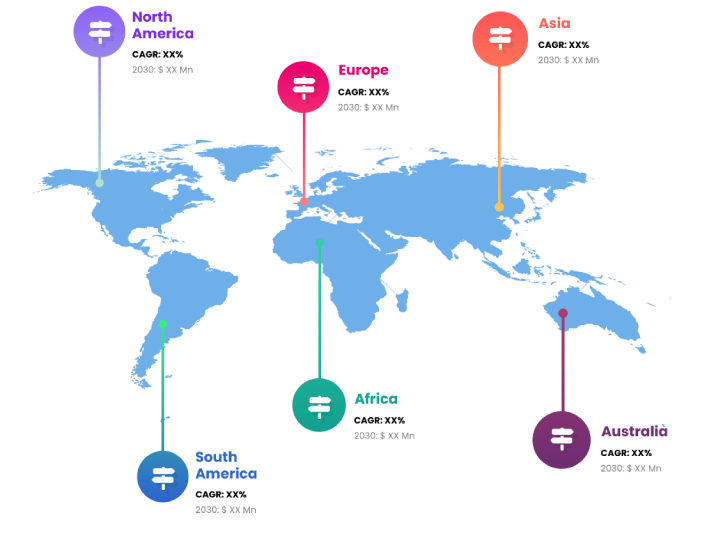
Global Sales Performance Management market, Regional Analysis
- Europe: Germany, Uk, France, Italy, Spain, Russia, Rest of Europe
- The Asia Pacific: China,Japan,India,South Korea,Australia,Rest of Asia Pacific
- South America: Brazil, Argentina, Rest of South America
- Middle East & Africa: UAE, Saudi Arabia, Qatar, South Africa, Rest of Middle East & Africa
You will get in-depth and extensive sales performance management market market research and competitor analysis for your business to help you develop more profound insights into the sales performance management market Market.
Through INFINITIVE Data Expert is a professional Market Research services, I will identify the sales performance management market market size, demand & opportunities, growth rate, and target audience with a comprehensive analysis of your competitors.