

The increasing demand for 3D cameras can be attributed to the expanding applications of 3D imaging in fields such as home automation, VR, robotics, and video surveillance. The convenience and precision of making 3D representations of items and settings are driving up demand, which in turn will expand the industry. The report, titled "Global 3D Camera Market," analyzes the industry as a whole. The research provides a thorough examination of the market's most important subsegments, trends, drivers, restraints, competitive landscape, and other variables.
During the foreseen time period, revenue from the worldwide 3D camera market is expected to expand at a healthy rate. This is because to developments like the entertainment industry's rising need for 3D content, improved 3D scanning technology, and evolving user tastes and preferences. Despite these benefits, the worldwide market is limited by factors such as pricing barriers and a lack of consumer education. Key participants in the 3D camera market can expect attractive prospects due to the anticipated growth of home automation applications, virtual reality applications, and automated processes in industries.
Drones and robots are increasingly employing the use of 3D cameras. The use of 3D cameras in robotics has the potential to greatly enhance the effectiveness of production lines and other industrial processes. Robots, for instance, can be trained to carry out difficult jobs with better precision and accuracy with the use of 3D cameras that record precise information about the environment. This has the potential to boost productivity, cut down on waste, and make factories safer places to work. The number of new industrial robots installed in companies in 2021 was a record 517,385, as reported by the IFR (International Federation of Robotics) in their 2022 World Robotics report. In 2018, the world's inventory of working robots reached a new high of around 3.5 million units, while projections for 2022 called for a 10% increase in worldwide robot installations, reaching almost 570,000 units. The need for 3D cameras will be fueled by the rising use of industrial robots for 3D imaging.
There may still be technological constraints that affect the quality of photos and movies captured with 3D cameras, despite recent advancements in the field. For instance, in low-light or complexly lit scenes, 3D cameras may have trouble capturing precise depth information. This may prevent its widespread use in fields like professional filmmaking and science. In addition, 3D cameras' viewing angles and depth perception aren't always up to snuff, especially in dark or highly contrasted settings. This may lead to inaccurate or unfinished 3D models. The use of a 3D camera can be more difficult than that of a 2D camera, necessitating expertise in fields like 3D modeling and image processing. This could be a problem for people who don't have the time or knowledge to learn how to use 3D cameras properly.
The expansion of the entertainment industry's appetite for 3D content and advances in 3D scanning technology are two major drivers driving the 3D camera market. However, price concerns and a general lack of knowledge are anticipated to slow the development of the 3D camera market. Conversely, the growing industries of home automation and virtual reality are expected to create lucrative prospects for 3D camera manufacturers. Each of these variables is expected to have a considerable effect on the market throughout the course of the foreseen time frame.
The global 3D camera market is developing due to the increasing demand and popularity of 3D content in the entertainment industry. The expanding use of 3D photography in fields including home automation, VR, robotics, and security has also driven up demand for 3D cameras. Key reasons driving the market for 3D cameras include the increased desire for 3D televisions and the relative ease with which 3D cameras can be integrated into smartphones.
Many amateur photographers now choose cell phones over SLR cameras due to the convenience of having a powerful camera on hand at all times. The global market for 3D cameras is being propelled by the increasing demand for 3D media. Because of the increasing financial value of 3D photography, more and more publications are incorporating it into their efforts to broaden their readership.
Report Coverage
Global 3D Camera research report categorizes the market for global based on various segments and regions, forecasts revenue growth, and analyzes trends in each submarket. Global 3D Camera report analyses the key growth drivers, opportunities, and challenges influencing the global market. Recent market developments and 3D Camera competitive strategies such as expansion, product launch and development, partnership, merger, and acquisition have been included to draw the competitive landscape in the market. The report strategically identifies and profiles the key 3D Camera market players and analyses their core competencies in each global market sub-segments.
| REPORT ATTRIBUTES | DETAILS |
|---|---|
| Study Period | 2017-2030 |
| Base Year | 2022 |
| Forecast Period | 2022-2030 |
| Historical Period | 2017-2021 |
| Unit | Value (USD Billion) |
| Key Companies Profiled | Eastman Kodak Company, Orbbec 3D Technology International, Inc., Canon Inc., Faro Technologies Inc., Fujifilm Holdings Corporation, GoPro Inc., Intel Corporation, LG Electronics Inc., Nikon Corporation, Panasonic Corporation, Samsung Electronics Co. Ltd., Sony Corporation. |
| Segments Covered | • By Product |
| Customization Scope | Free report customization (equivalent to up to 3 analyst working days) with purchase. Addition or alteration to country, regional & segment scope |
Key Points Covered in the Report
- Market Revenue of 3D Camera Market from 2021 to 2030.
- Market Forecast for 3D Camera Market from 2021 to 2030.
- Regional Market Share and Revenue from 2021 to 2030.
- Country Market share within region from 2021 to 2030.
- Key Type and Application Revenue and forecast.
- Company Market Share Analysis, 3D Camera competitive scenario, ranking, and detailed company
profiles. - Market driver, restraints, and detailed COVID-19 impact on 3D Camera
Market
Competitive Environment:
The research provides an accurate study of the major organisations and companies operating in the global 3D Camera market, along with a comparative evaluation based on their product portfolios, corporate summaries, geographic reach, business plans, 3D Camera market shares in specific segments, and SWOT analyses. A detailed analysis of the firms' recent news and developments, such as product development, inventions, joint ventures, partnerships, mergers and acquisitions, strategic alliances, and other activities, is also included in the study. This makes it possible to assess the level of market competition as a whole.
List of Major Market Participants
Eastman Kodak Company, Orbbec 3D Technology International, Inc., Canon Inc., Faro Technologies Inc., Fujifilm Holdings Corporation, GoPro Inc., Intel Corporation, LG Electronics Inc., Nikon Corporation, Panasonic Corporation, Samsung Electronics Co. Ltd., Sony Corporation.
Primary Target Market
- Market Players of 3D Camera
- Investors
- End-users
- Government Authorities
- Consulting And Research Firm
- Venture capitalists
- Third-party knowledge providers
- Value-Added Resellers (VARs)
Market Segment:
This study forecasts global, regional, and country revenue from 2019 to 2030. INFINITIVE DATA EXPERT has segmented the global 3D Camera market based on the below-mentioned segments:
Global 3D Camera Market, By Type
Target Camera
Target-free Camera
Global 3D Camera market, By Application
Professional Cameras
Smartphone
Tablets
Computer
Others
Global 3D Camera Market, By Technology
Time-of-Flight
Stereo Vision
Structured Light
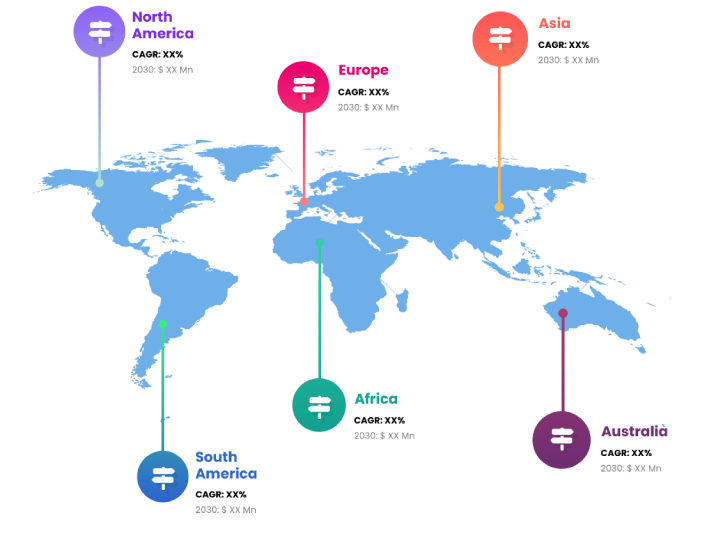
Global 3D Camera market, Regional Analysis
- Europe: Germany, Uk, France, Italy, Spain, Russia, Rest of Europe
- The Asia Pacific: China,Japan,India,South Korea,Australia,Rest of Asia Pacific
- South America: Brazil, Argentina, Rest of South America
- Middle East & Africa: UAE, Saudi Arabia, Qatar, South Africa, Rest of Middle East & Africa
You will get in-depth and extensive 3d camera market market research and competitor analysis for your business to help you develop more profound insights into the 3d camera market Market.
Through INFINITIVE Data Expert is a professional Market Research services, I will identify the 3d camera market market size, demand & opportunities, growth rate, and target audience with a comprehensive analysis of your competitors.